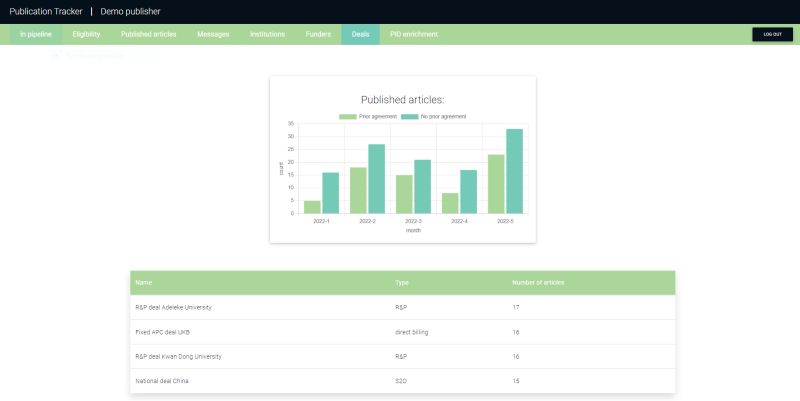
Publication Tracker
The collaboration with Rockefeller University Press focused specifically on further expanding standard connectors so that they could also be used generically by other publishers who use Publication Tracker.
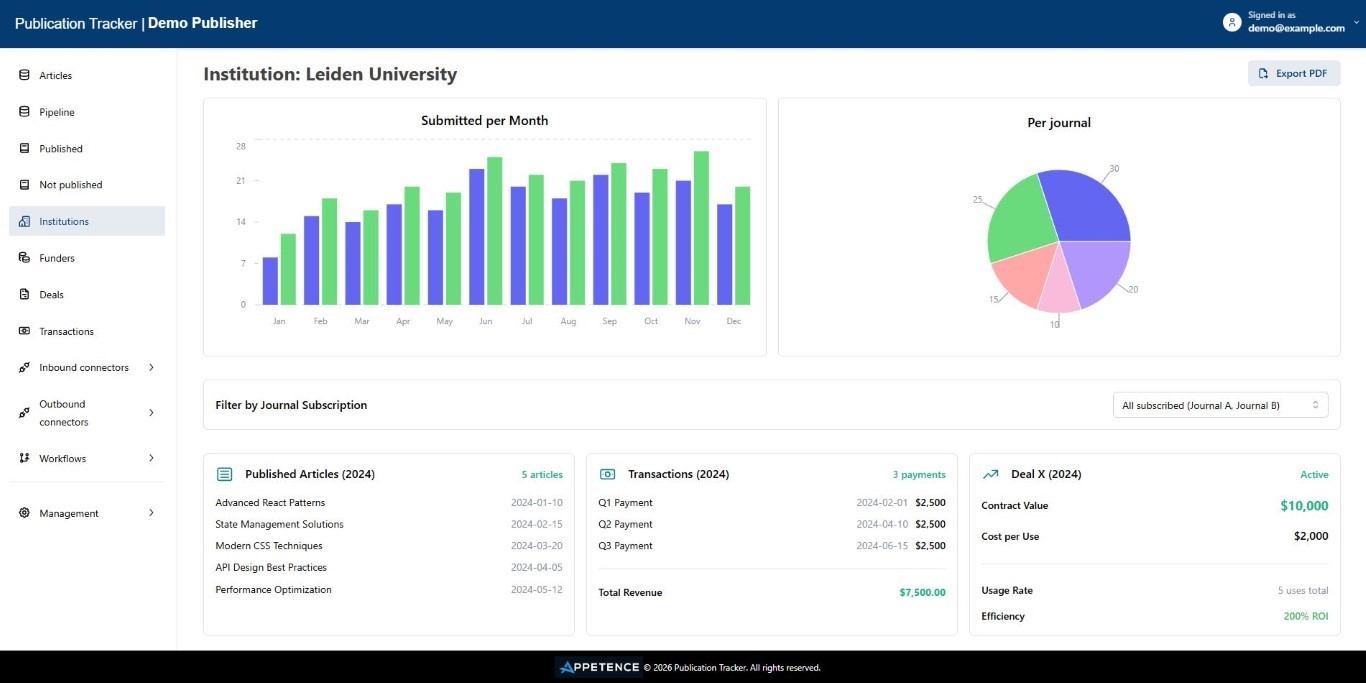
More connectors provide more (meta)data and ultimately a better picture of the entire lifecycle, from submitted manuscript to published article. This is not possible without a good reporting tool. Publication Tracker is primarily the backbone that captures data in a central store. On top of that, we implement a Business Intelligence (BI) layer for our publisher clients, including Rockefeller University Press. We prefer to use AWS Quicksight, but connecting your own BI solution such as Microsoft PowerBI or Tableau is also no problem at all.
-
When
2025 - 2026
-
Client Name
Rockefeller University Press
Connectors
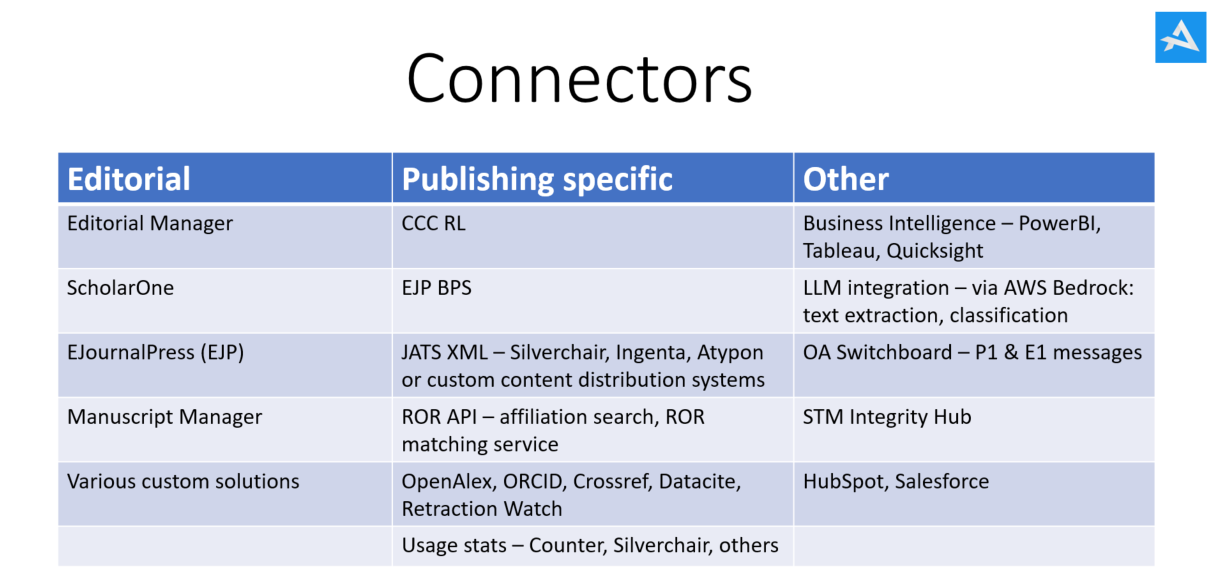
Integration with editorial systems has been improved. We now capture a much larger set of events from Editorial Manager, ScholarOne, E-Journalpress, and Manuscript Manager. Each event contributes metadata to the central metadata store. Standard e-commerce connectors also exist with, among others, CCC RL and the billing and payment module of E-Journalpress.
Of course, integration with publication flows remains an important part of the tool. Processing JATS XML feeds is one of the standard features, as are outbound connectors to OA Switchboard, among others. This is and often remains the starting point for implementing Publication Tracker.
New to the offering is connectivity with systems such as HubSpot or Salesforce, where publishers often store commercial deal and subscription information. It is extremely valuable to have this type of data available so that it can be combined with other publication-level metadata.
We have also added usage data via a generic connector that imports data in COUNTER format. It does not matter whether that data comes from our own hosting system or from an external platform such as ResearchGate.
Text classification or tagging is solved with a standard connector to AWS Bedrock, a generic API to all kinds of LLMs. The so-called ‘prompt’ is configurable. For Rockefeller University Press, we use this to tag SDGs (UN Sustainable Development Goals), but the connector has a much broader range of applications.
Research Integrity (RI) is a hot topic. We have added a connector to the STM Integrity Hub so that RI signal data can be combined with other metadata within Publication Tracker. This provides access to trends and analyses that are not available in the isolated silo that RI generally is.
Enriching metadata with persistent identifiers is important for all publishers. Part of this project also involved further integrating our ROR matching service into the Publication Tracker tool.
Finally, connectors with community-based services such as ROR, Crossref, and OpenAlex were also reviewed, opening the door to specific workflows. For example, we check for Rockefeller University Press whether rejected articles are published elsewhere after a certain period of time. If so, we also capture that as an event with its own metadata in the tool.